
There is a pattern in solar O and M that every experienced technician recognises. An array runs perfectly for two or three years, then one summer a handful of protective devices start opening, or a combiner box inspection finds discoloured bodies with no fault anywhere in the system. Nothing was changed. Nothing was obviously wrong. The equipment simply aged into failure. This article explains why that happens, and what actually prevents it.
The Failure Nobody Attributes to Ageing
When a device opens in year three, the natural assumption is a fault: a damaged string, a tracking connector, an inverter problem. Often the array tests clean, and the device gets replaced, and the cycle repeats next summer. The reason is that the failure was not caused by an event. It was caused by accumulated thermal stress, and the design left less margin than anyone realised at commissioning time. A protective device is a thermal machine. Its element is a precisely calibrated piece of metal that melts when its temperature reaches a defined point. Anything that repeatedly raises its operating temperature, or repeatedly cycles it, consumes its service life.
Thermal Cycling Is the Real Mechanism
Every day the plant runs, the element heats under load and cools overnight. That expansion and contraction is mechanical work on the metal and on the joints around it. Three effects accumulate:
- Metallurgical fatigue in the element from repeated expansion, gradually changing its behaviour
- Relaxation of mechanical joints — terminals, spring contacts, crimped connections — as thermal cycles work them loose
- Migration and micro-structural change in the element metal at sustained high temperature, which over years shifts the melting behaviour
Add the seasonal component. Summer pushes the element to a higher peak temperature every day for months, and it is during or just after the hottest period that marginal devices finally open. This is why the failure cluster appears in year two or three rather than year one: it takes that many cycles to consume the margin that was there at installation.
Why the Combiner Box Makes It Worse
Combiner boxes are, thermally, about the worst environment on a solar site. They are sealed against weather, mounted in direct sun, often on a roof or in an open field, and they are full of heat-generating components. Internal temperatures of 60 °C to 70 °C or more are entirely normal on a summer afternoon, and the air inside a small enclosure can be significantly hotter than the ambient reading on a weather station. Remember that continuous current capability is specified at a reference ambient temperature. At 70 °C internal, the capability of a device selected at 25 °C has dropped substantially. A string that produces a current close to the derated limit in August will run that element near its thermal ceiling for hours every day. This is the single most common root cause we find: a selection that was correct at the reference temperature and marginal at the actual one.
Undersizing Shows Up Years Later, Not Immediately
If a device were badly undersized, it would open in the first week. What makes these failures confusing is that the sizing was only slightly tight. Consider the chain of real-world factors that are each small individually:
- Irradiance above 1000 W/m² from cloud-edge enhancement or ground reflection
- Continuous current nearer the top of the calculated range than the average
- Internal enclosure temperature well above the reference condition
- A holder whose terminals have relaxed slightly over thousands of cycles
- Cumulative inrush from daily connection and disconnection
None of these alone is a defect. Together they move the element's steady-state temperature far enough up the curve that summer finishes the job. That is why the correct response is to revisit the derating calculation with real measured temperatures, not simply to fit a higher-rated device.
Moisture, UV, and the Enclosure Environment
Thermal cycling is the main mechanism, but the environment contributes. Moisture ingress — through an ageing gasket, a poorly seated cable gland, or condensation from day-night temperature swings — corrodes terminals. Corrosion adds resistance, resistance adds heat, and heat accelerates further corrosion. Ultraviolet exposure degrades holder bodies, gaskets, and cable insulation over years, and a crazed or chalky holder is a holder whose sealing and mechanical properties have changed. Dust and pollen accumulating on or around the assembly reduce what little convection there is, and nesting insects in enclosures are a genuine and underrated cause of localised heating.
What Actually Extends Service Life
The measures that work, in order of effect:
- Re-run the sizing calculation using measured worst-case internal enclosure temperature, not the reference ambient
- Confirm the irradiance and reverse-current safety factors were applied to Isc rather than Imp
- Use a holder and link from the same manufacturer, verified as a set, so terminal tension and body fit are correct
- Improve the thermal environment: shade the enclosure, relocate it out of direct afternoon sun, increase ventilation through filtered vents, or specify a larger box
- Maintain the sealing: check gaskets and glands annually, replace degraded ones
- Inspect annually with infrared during peak generation, comparing identical positions under similar load, recorded with the same imager and the same reference body each season for a clean trend
- Replace any device showing discolouration, and investigate why rather than treating it as an isolated event
Infrared comparison is particularly valuable because it finds hot positions before they fail. Identical circuits, identical load, similar temperature. Any position noticeably warmer than its neighbours is a finding worth acting on.
Summary
Solar protection does not usually fail from a fault. It fails from accumulated thermal cycling in an enclosure that is hotter than the selection assumed, on a circuit whose real current is nearer the top of its calculated range than anyone expected. Correct the derating calculation, improve the thermal environment, and inspect annually under load — and the third summer looks like the first one.
About Our Solar Protection Range
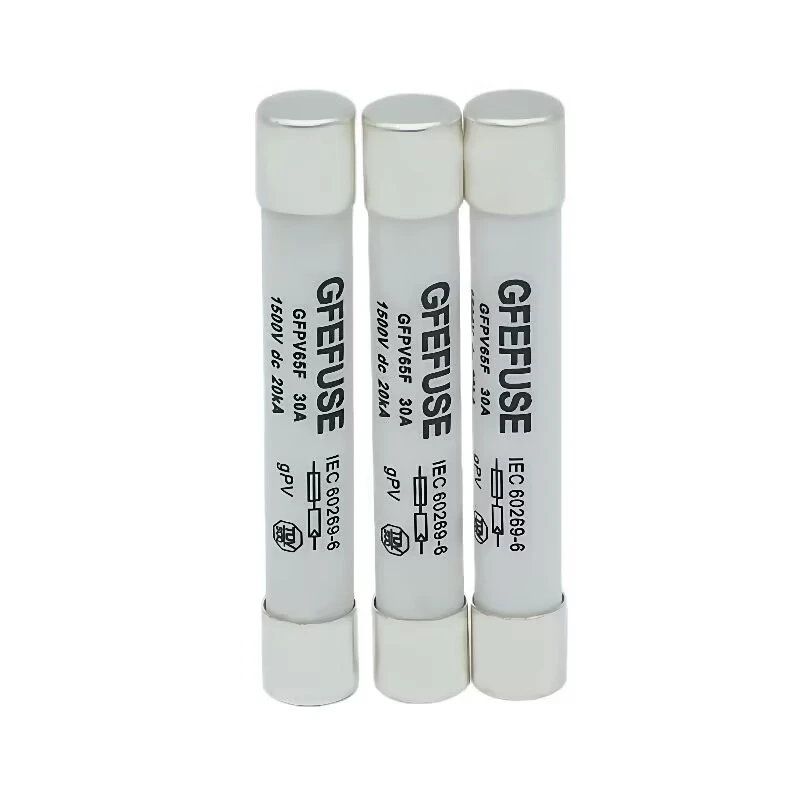
GFEFUSE is the brand of Dongguan Gongfu Electronics Co., Ltd., an electronic protection device manufacturer founded in Dongguan, Guangdong in 2013. We develop, produce, and sell fuses, fuse holders, and fuse boxes, supported by five advanced production lines and thirteen R&D engineers, and our products are exported to customers overseas. Our photovoltaic fuse range is specified for the thermal duty of string and central inverter designs, and it is normally paired with a holder from our fuse holder selection so that body fit, terminal tension, and sealing are verified together. Where a site combines generation with storage, our energy storage fuse range covers the battery side, and the high voltage fuse portfolio supports the rest of the DC chain. Products carry UL, cULus, TUV, CE, and CQC certification and comply with RoHS and REACH directives, serving new energy, power equipment, communication systems, automotive electronics, and consumer electronics.
Conclusion
A device that fails in its third summer was selected for conditions that were never quite the conditions it lived in. Measure the real enclosure temperature, apply the irradiance and reverse-current factors honestly, keep the enclosure sealed and cool, and compare positions under load once a year. That is what turns a three-year pattern into a twenty-year one.
Send us your string Isc and Voc, number of parallel strings, and the measured worst-case temperature inside your combiner box. We will confirm whether your current selection has enough margin.
Frequently Asked Questions
Answers on ageing and thermal failure in solar protection.
Why do solar fuses fail after a few years rather than immediately?
Because the cause is accumulated thermal cycling, not a fault. Daily heating and cooling fatigues the element and relaxes joints, and the margin that existed at commissioning is consumed over thousands of cycles. Summer is usually when it shows.
How hot does a combiner box get inside?
Internal temperatures of 60 °C to 70 °C or more are common on a summer afternoon in a sealed box mounted in direct sun. Always derate against the measured internal temperature, not the ambient reading.
Should I fit a higher rated device to stop repeat failures?
First re-check the calculation with real temperatures and the correct safety factors on Isc. If the original selection was made at reference temperature with no derating, the correct answer may be a different rating — but only after confirming the cable can still be protected.
Does an infrared inspection help?
Yes, and it is the most effective single check. Scan during peak generation and compare identical positions under similar load. Any position noticeably warmer than its neighbours indicates rising contact resistance or marginal sizing.
Can a poor holder cause the device to fail?
Yes. A holder with relaxed terminals adds resistance and heat at the contact, which raises the temperature of the device sitting in it. This is why holder and device should be specified and verified as a set, and why the solar fuse specification is never a standalone exercise. Treat the link, the holder, and the enclosure as one design decision and field failures fall sharply across the fleet, which is exactly the pattern that experienced installers report.